Helping young adults design their lives after high school
If you’re like most parents, you have spent eighteen years teaching your child how to live an independent life. At the same time, the path through childhood is mostly predetermined: the schedule, the classes, the summers, the next step after this one. Most of it arrived already decided. The academic pipeline prepares children for a career, but it can also strip them of the agency they'll need in a landscape that keeps changing.
For many families, the academic pipeline extends beyond high school and into college. But times are changing. A generation of young people are learning only after they are in debt that a degree does not guarantee any particular job, future, or life. That isn’t a reason to forgo college. It is a reason to treat this as a real decision, not just an assigned grade thirteen. It is an opportunity to pause, reflect, and actively choose the next step.
College is a requirement for many careers, and it may also be the right step for a young adult who isn’t yet sure what they want, but that framing changes which institutions to target. The great books curriculum is wonderful for a student who needs more time, but the wrong choice for a student planning a career in engineering.
What comes after high school is the first thing your student gets to fully design. That's a bigger deal than the application deadlines make it look. It deserves more than a few rushed conversations in October of senior year.
This program is for young adults ready to thoughtfully explore what they want their future lives to look and feel like. It's built for students with intrinsic motivation who either haven't yet found their calling or discovered it late and now have a transcript that reflects that shift.
It asks something of the student. I can bring the questions, the research, and the time, but a student who isn't willing to engage won't get much from it and may not be the right fit.
Seventeen is early to be asking these questions, not late. Too many people don't do it until their thirties. A student who is actually asking what they want instead of following the herd onto the next step is ahead of the curve, even if their transcript is uneven, even if they spent a year or two unfocused, even if they still have no idea. Not knowing yet isn't a problem to be fixed. It is a world of opportunity to be explored.
Half of this is soul-searching and half is logistics, and the logistics don't work without the first half.
The first half is figuring out what your student actually wants: what they're drawn to, what comes easily, what they've been avoiding and why, and which of their current plans are theirs versus inherited. This takes months and it can't be rushed, which is why the full program starts in junior year.
The second half is the practical work: researching real options, building a list that fits, understanding cost, and getting the applications done well.
Options means all of them. Four-year college, but also trade and technical programs, apprenticeships, community college transfer paths, gap years, service programs, certifications, and working for a year. I research specific programs for your student rather than handing you a list of categories. Some of the options I present don't involve a bachelor's degree.
I don't steer students toward or away from college. I help them find out whether college will help them get where they want to go, and if it will we explore colleges and move onto applications. If the plan is elsewhere, I will guide them in building it out.
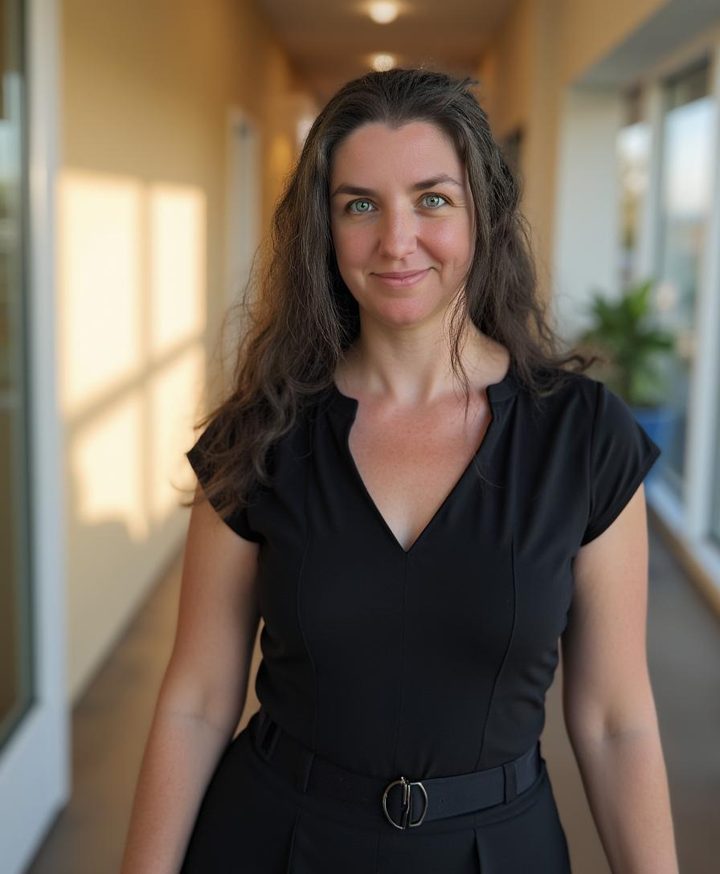
Today I am a physician and published author, but my first professional job was as an AmeriCorps volunteer designing service-learning opportunities for middle school students in our nation’s capital. Working with young people is a thread I have never abandoned. I have worked for Johns Hopkins Center for Talented Youth, Higher Achievement, and Leadership Enterprise for a Diverse America. I founded and ran a youth advocacy program in Cameroon for five years, managed an international training and grants program at the Atlas Network, and founded a nature preschool where I designed the curriculum and ran the school.
I came to medicine in my thirties, after twenty years of engagement with young people, program design, freelance writing, multiple stints abroad, and the threads of a career that didn't look like a plan while I was in the middle of weaving them.
Along the road I also edited Womentality (Three Rooms Press), a book about people who left the path they were supposed to be on and built something else. It received a starred review in Publishers Weekly and was named to Entertainment Weekly's 30 best books of the year. I've written for Doximity, KevinMD, and the Huffington Post, and I hold a master's from the London School of Economics.
I've changed direction more than once, deliberately. That's the skill I'm actually teaching. This decision is the first of several your student will make and knowing how to make it well is worth more than getting this particular one right.
A $1,500 deposit reserves your student's seat and is non-refundable. The balance is payable monthly from January.
Early commitment: $6,000 for families who reserve before November 1.